
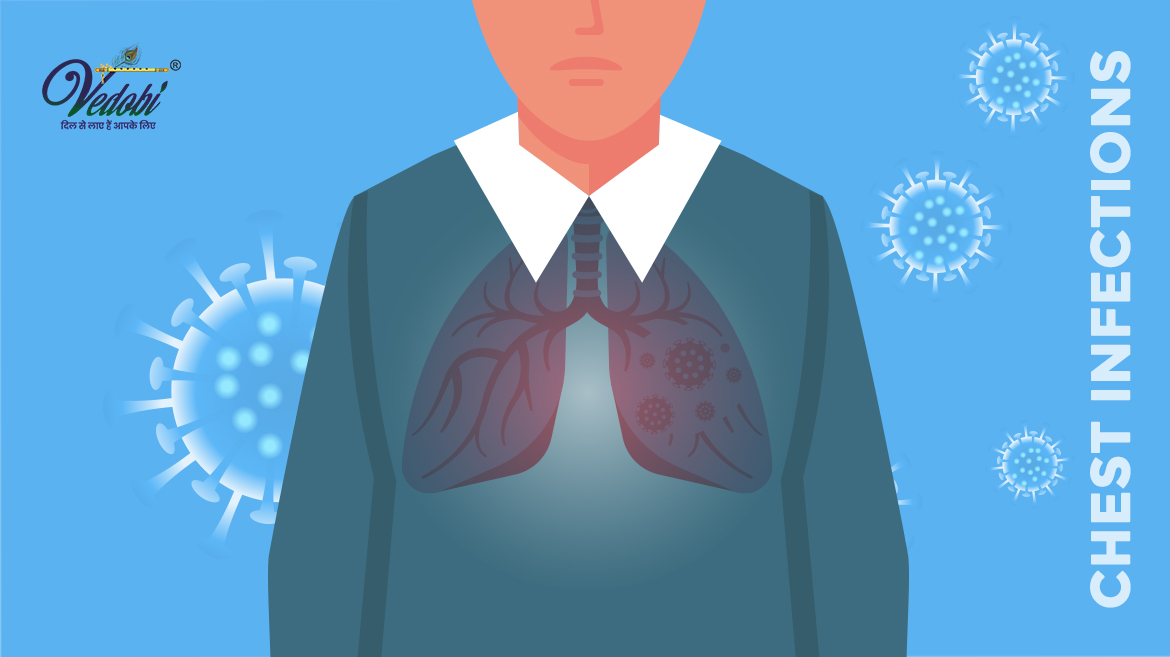
Chest infections: Causes, Symptoms, and Treatment
10 August, 2025
A chest infection is an infection that affects the lower part of the respiratory tract, including the lungs, bronchi (the tubes that lead to the lungs), and alveoli (small air sacs in the lungs where oxygen is exchanged). Chest infections are caused by bacteria, viruses, or other pathogens that can lead to inflammation and infection of the airways or lung tissue, causing cough, shortness of breath, and fever.
Types of chest infections
There are two types of chest infections: bronchitis and pneumonia. Both are common, but they differ in symptoms.
1.Bronchitis
It is the inflammation of the main airways that carry air to the lungs. It is caused by bacterial or viral infections and lasts for a few weeks.
Symptoms of Bronchitis:
- Sore throat
- Headache
- Wheezing or shortness of breath
- Mild fever
- Fatigue
2.Pneumonia
It is an inflammation of the lung tissue that affects the tiny air sacs in the lungs where oxygen and carbon dioxide are exchanged. It can be caused by a variety of pathogens, bacteria, fungi, viruses, and parasites. Mostly, it affected those with weakened immune systems.
Symptoms of Pneumonia:
- Pain while coughing and sneezing
- High fever
- Rapid heartbeat and shallow breathing.
- Fatigue
- Dizziness
Causes of chest infections
There are several factors, including bacteria and viruses, which are the most common causes. Here are the key causes:
1.Bacterial infections
This infection can be typically more severe than viral infections. These include:
- Streptococcus pneumoniae is the leading cause of bacterial pneumonia.
- Hemophilus influenzae is a bacteria that causes respiratory infections and is common in individuals with chronic lung diseases.
- Mycoplasma pneumoniae is a bacteria that causes atypical pneumonia.
- Legionella pneumophila is a severe type of bacteria that is acquired through the inhalation of contaminated water droplets.
2.Viral infections
It is the leading cause of infections, especially during the winter. Some common viruses are:
- Influenza virus is a contagious viral infection that affects the respiratory system and can lead to pneumonia or bronchitis.
- COVID-19 is also a contagious infection and can lead to pneumonia.
Symptoms
Chest infections can manifest in various ways. The most common symptoms are:
- Persistent cough
- Difficulty in breathing
- Chest pain or wheezing.
- Fever and chills
- Fatigue
- Weakness
Diagnosis
Diagnosing chest infections involves a combination of medical history and diagnostic tests. Here are the following methods:
- Medical history and physical analysis The doctors will ask about the patient’s symptoms, medical history, and underlying conditions Moreover, they perform physical evaluations, including listening to the patient’s breathing to check for any sign of infection.
- Chest X-rays or CT scans may help visually identify any abnormalities in the lungs.
- Blood tests are taken because they provide a complete blood count (CBC) and identify the presence of an infection.
Treatment
The treatment mainly depends on the underlying cause of the infection. Here are some common treatment approaches:
- Antibiotics are often prescribed by doctors to help eradicate the infection and prevent resistance.
- Antiviral medications: Doctors may prescribe these, especially for infections like viral fever, COVID-19, and influenza. These medicines help reduce the duration and severity of viral chest infections
- Cough medicines and pain relievers like cough suppressants and expectorants may help manage the persistent cough caused by chest infection.
- Proper hydration and adequate rest are essential for the body’s natural healing.
How to prevent chest infection
- Strengthen your immune system: Eating a balanced, nutrient-rich diet, exercising regularly, and getting adequate sleep support immune function and reduce the risk of infection.
- Maintain proper hygiene: Regularly washing your hands prevents the spread of viruses and bacteria.
- Get vaccinated: Vaccines help reduce the risk of viral and bacterial infections.
When should I see a doctor?
You should consult a doctor if you experience:
- High fever
- Chest pain or discomfort
- High fever
- Coughing up thick, discoloured mucus
Sources:
1. Healthline: What is chest infection?, Types
Link: https://www.healthline.com/health/chest-infections
2. Carehospitals: Symptoms, Causes, treatment, and prevention
Link: https://www.carehospitals.com/symptoms/chest-infection